Crane and Large Tree Removal in Framingham
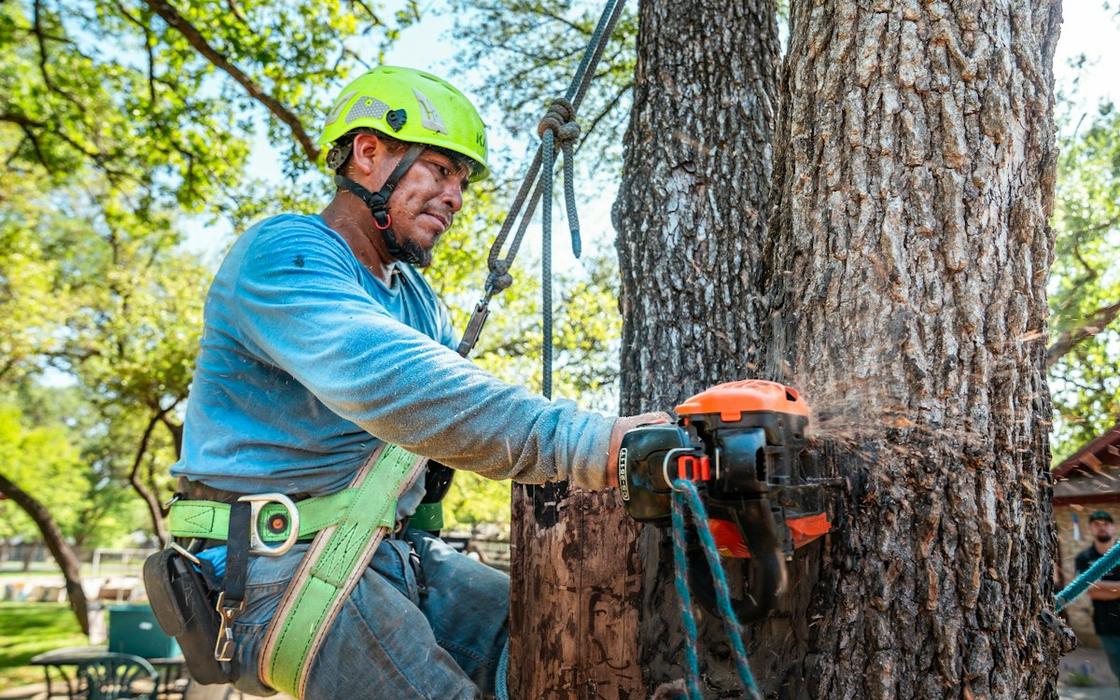
Some trees are too big, too close or too far gone to take down by climbing and lowering on ropes. A 100-foot white pine behind a house in Saxonville, a wide red oak leaning over a pool, a dead ash with nowhere to drop the pieces. For trees like these, a crane is the safer way to go and often the faster one.
When we use a crane
- The tree hangs over the house and there is no open ground to lower pieces into
- The wood is dead or decayed and not safe to climb or tie into
- The tree sits in a backyard that a bucket truck cannot reach
- Sections are too heavy to rope down without loading the trunk or the roof
- The tree is already on the house after a storm
Not every large removal needs one. A big tree in an open yard can often come down with a climber and a good rigging plan. We decide on the visit, and the estimate says which method we are using and why.
How a crane pick works
The crane sets up in the street or the driveway, on outriggers with pads under them. A climber goes up the tree, or rides up in a basket on the crane, and attaches straps to the first section. The crane operator takes the weight. The climber makes the cut, and the crane lifts the piece up, over the house, and down to the ground crew in a clear landing spot. Then the climber moves to the next piece. Big limbs come first, then the trunk in sections from the top down.
Nothing swings into the roof or drops onto the deck. Every piece is weighed in the operator's head before it is cut, and the operator and climber stay on the radio the whole time. A tree that would take two days of climbing and lowering often comes down in a few hours.
Protecting your lawn
A crane is heavy, and so are the logs it sets down. We lay ground mats or plywood under the outriggers and along the path to the landing zone. We also ask about septic tanks, leach fields, sprinkler lines and buried propane before we pick a setup spot, since a crane should never sit on any of those. Ruts in a soft lawn can still happen in wet spring weather, so we plan the job for firm ground when we can.
Working from the road
On many jobs the crane has to park in the street. Work that blocks part of a public way may need a permit from the city and a police detail to direct traffic. That is common on busier roads like Route 9, Edgell Road or Concord Street, and less so on quiet side streets. We tell you up front if your job will need either, and we handle the scheduling.
If the tree is in the strip by the road, it may be a city tree under the state shade tree law. Read our street tree guide before you plan a removal there.
Cost and cleanup
A crane adds a day rate, but it often cuts crew hours enough to even out. For dead trees and trees over houses, it is also the safest choice. The wood gets cut to length and hauled, the brush gets chipped, and the stump can be ground the same day. See our tree removal page for standard takedowns and the cost guide for typical prices.
Call (508) 555-0142 or use the form on this page for a free written estimate on crane & large tree removal in Framingham.
Common Questions
- Will a crane damage my lawn or driveway?
- We put mats or plywood under the outriggers and along the work path to spread the weight. Some marks on soft lawn can happen in wet weather, and we will talk through that before the job.
- Does crane tree removal cost more?
- The crane itself adds cost, but it often shortens the job enough to balance out. For dead trees or trees right over a house, it is often the only safe way to do it.
- Do I need a permit for a crane in the street?
- Work that blocks part of a public road may need a city permit and a police detail. We let you know during the estimate and set it up for you.
- How close does the crane need to get?
- It depends on the size of the crane and the weight of the pieces. Most of our crane jobs set up in the street or the driveway and reach over the house to the tree.